
The habits that built the company are the same ones that will cap it. The hard part isn't learning to delegate — it's noticing the exact moment your strengths flipped sides.
A founder I'll call Maya could tell you, off the top of her head, the close rate of every rep, the latency of the checkout flow, and which support tickets came in overnight. At twelve people, that wasn't micromanagement. It was the product. Her being in everything was the reason the company worked — the taste, the speed, the refusal to ship anything mediocre all ran through her directly.
At ninety people, the same instinct was quietly strangling the company. Deals waited on her review. Good hires left because every decision routed back to a bottleneck named Maya. She was working harder than she ever had, and the business was slowing down. From the inside it felt like a work-ethic problem. It wasn't. She'd walked off a cliff she never saw.
Most founders hit some version of this. I call it the Delegation Cliff: the stage where the founder behaviors that created the company's edge become the precise thing capping its growth. The cruelty of it is that nothing about your behavior changed. The company outgrew it.
Why the cliff is invisible until you're over it
You'd expect a failure this common to come with warning lights. It doesn't, for one reason: every symptom of being past the cliff looks like a virtue.
Being deeply involved looks like commitment. Reviewing everything looks like high standards. Being the final word on decisions looks like decisiveness and vision. Working brutal hours looks like the founder grit everyone celebrates. None of these read as problems — they read as the exact traits that got you funded and written about. So you double down on them at the very moment you should be dismantling them.
Meanwhile the real signals are showing up somewhere else entirely — not in your behavior, but in your team's. Decisions queue. Your best people start narrating problems to you instead of solving them, because they've learned you'll re-decide it anyway. Hiring stalls, not for lack of headcount budget, but because no senior person wants a job where the founder is still the actual operator. The diagnostic isn't "am I working hard?" It's "what is happening to the people around me?"
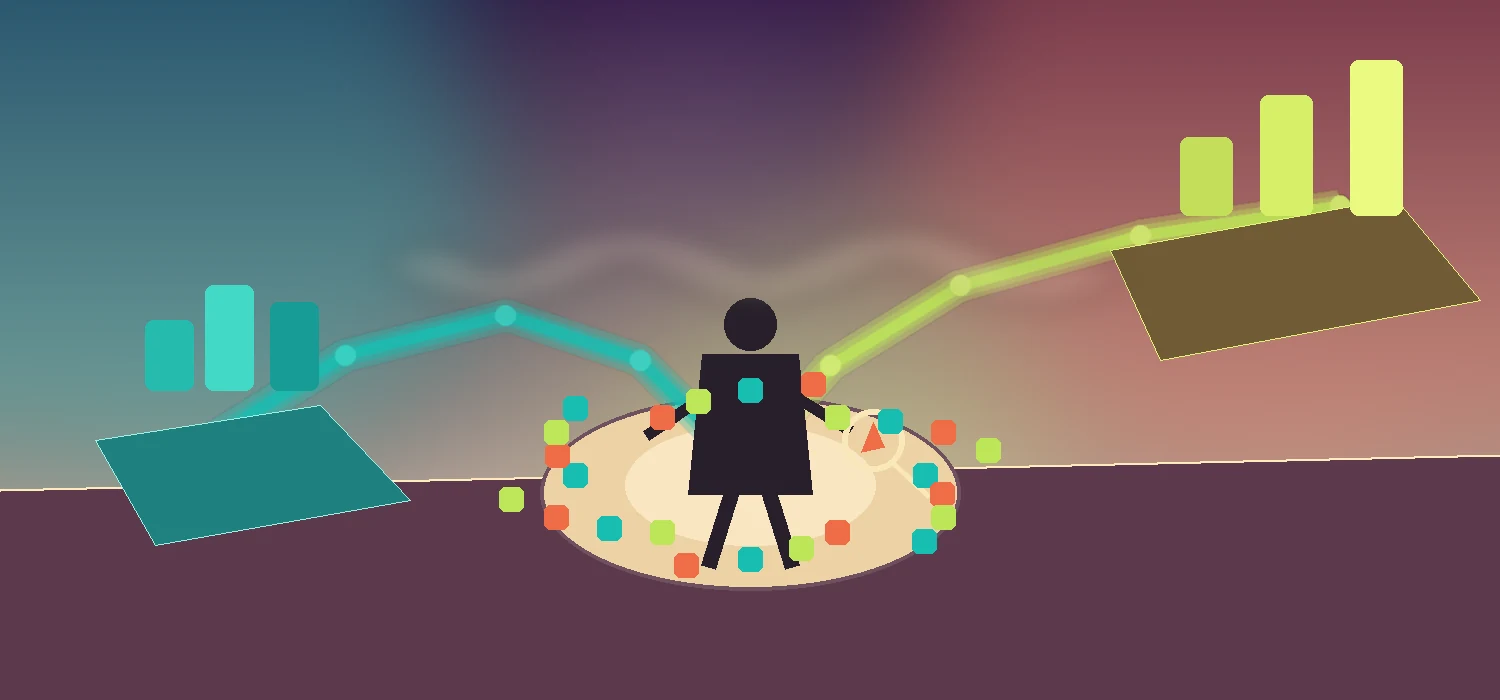
Visual 1 — The Delegation Cliff
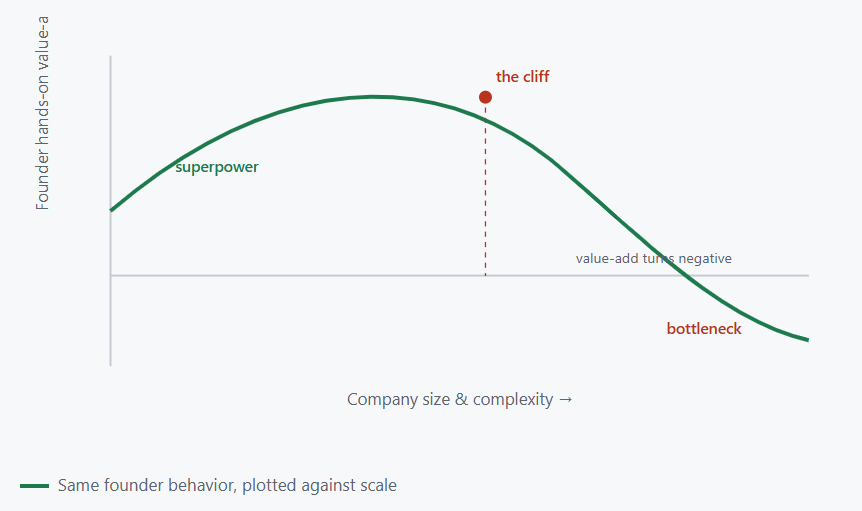
Conceptual model. The line doesn't fall because the founder got worse. It falls because being personally in everything stops scaling — and past the inflection point, the same depth that was the edge becomes the ceiling.
The Founder Mode trap
There's a fashionable counter-argument here, and it deserves a direct answer. The "founder mode" idea — that great founders stay deep in the details and the advice to delegate is what ruins good companies — has been used to justify a lot of cliff-walking. It contains a real truth wrapped around a dangerous license.
The truth: founders should keep their hands on the things only they can do — the taste, the standard, the handful of decisions that define what the company is. The license people hear instead: stay in everything, forever, and call your bottleneck "vision."
Staying deep on the few things that are genuinely yours is founder mode. Staying deep on everything is just a bottleneck that's learned to describe itself flatteringly.
The skill isn't choosing between "delegate" and "stay involved." It's knowing which is which — separating the work that needs your judgment from the work that merely feels safer when you do it.
What to keep, what to hand off
The useful cut isn't by seniority or by function. It's by the nature of the work. Hold on to what depends on judgment and taste — the things where being wrong is expensive and there's no playbook. Hand off what's becoming knowable — the things where a good operator with clear context will, within a few months, make a better-than-yours decision because it's now their full-time job and your part-time one.
Most founders invert this. They cling to the knowable work because it's comfortable and gives quick wins, and they neglect the judgment work — culture, the next bet, who's really on the team — because it's slow and ambiguous. Then they wonder why the company feels both over-managed and adrift. It's both, for the same reason.
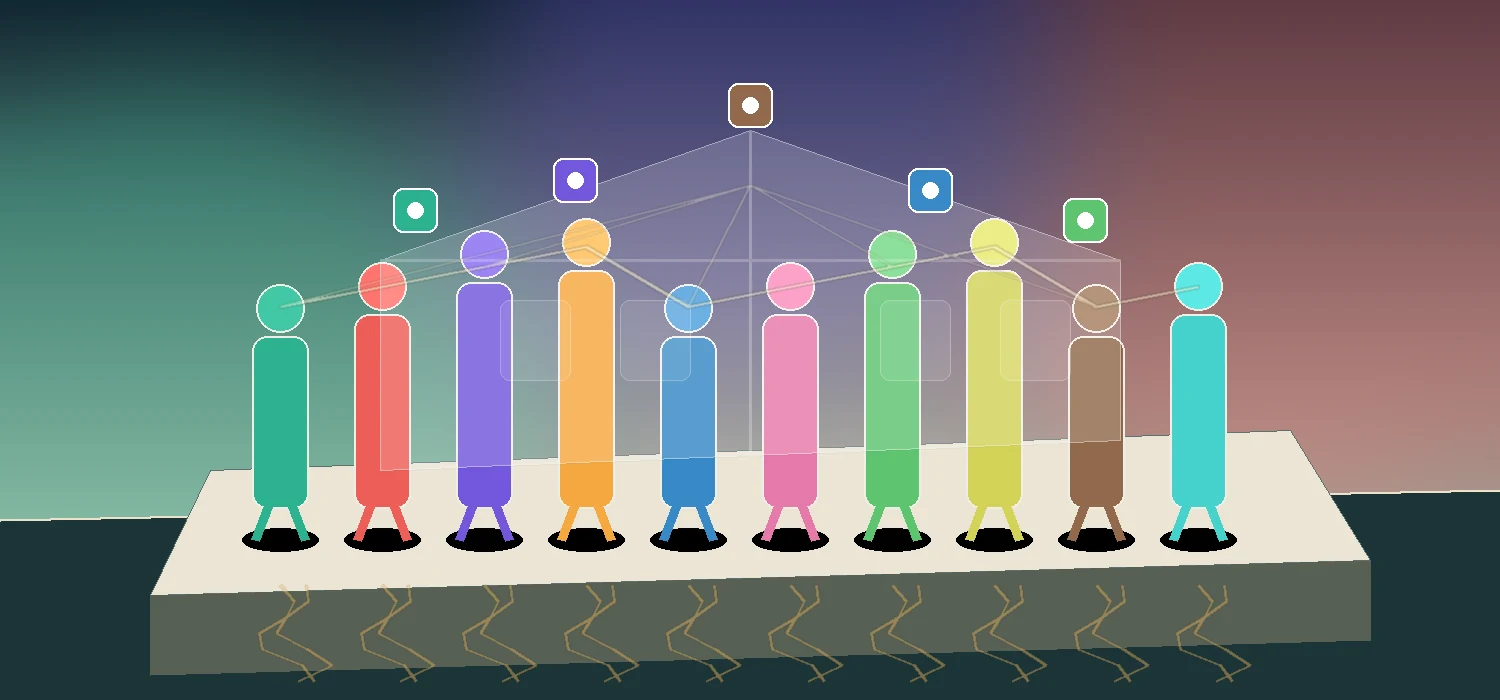
Visual 2 — Keep vs. hand off
Keep (judgment & taste) | Hand off (becoming knowable) |
|---|---|
The product standard — what "good enough to ship" means | Day-to-day execution against that standard |
Which big bets the company makes next | Running the bets already chosen |
Who sits on the leadership team | Hiring within each leader's function |
The handful of decisions that define the company | The hundred decisions that merely run it |
The test for any task: if a strong operator would beat your decision within two quarters of owning it full-time, it belongs in the right column — no matter how much you enjoy it.
What this means for founders
Watch your team's behavior, not your calendar. The cliff doesn't show up in how busy you feel — it shows up in queued decisions, narrated problems, and senior candidates who pass. Treat those as instrument readings, not personality quirks of the people around you.
Delegate the outcome, not the task, and resist the urge to re-decide. Handing someone a decision and then overruling it teaches the whole company that the handoff was theater. One reversal undoes a quarter of delegation. If you're not willing to live with a good-enough call that isn't yours, you haven't delegated — you've just added a step.
Time the move to the next stage, not the last one. Founders tend to restructure how they work right after the pain peaks — staffing for the company they had six months ago. The ones who scale cleanly make the uncomfortable handoffs a beat early, while it still feels premature, because by the time it feels obviously necessary, you've already paid for it in lost people and stalled decisions.
The founders who make it across don't love their company less. They've just understood something most never quite accept: at some point, the most valuable thing you can do for the thing you built is to stop being the one who holds it together — and start being the one who makes sure it can hold itself.
A LookatBusiness original. Scenarios are illustrative composites, not specific companies.